

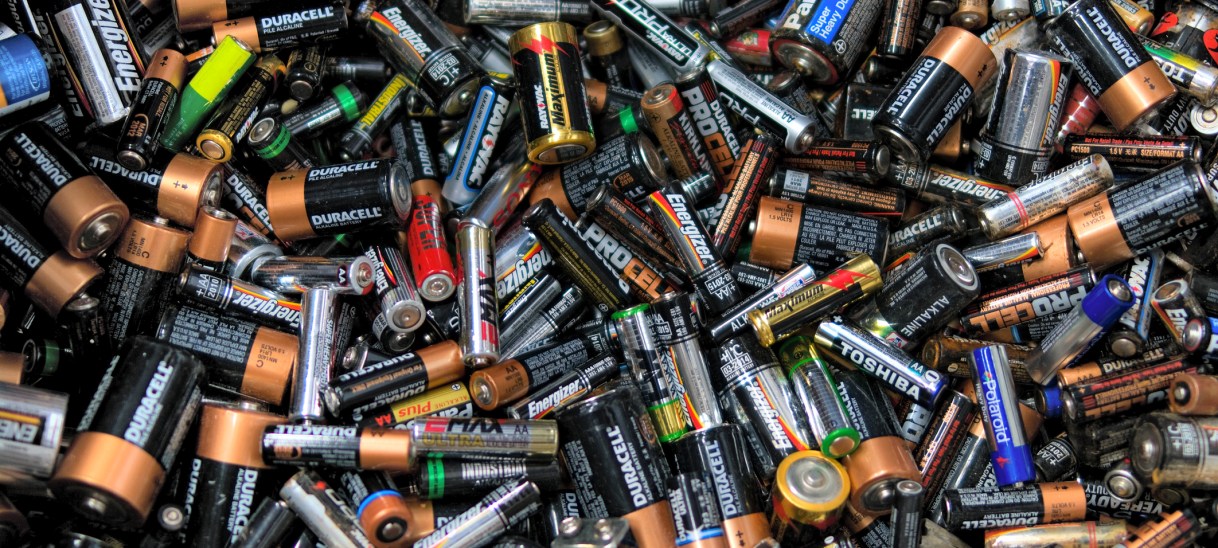
Batteries are everywhere in homes, schools, businesses, and ingrained in our lifestyle. While batteries are everywhere, they can also be a hazard if stored or used improperly. Certain batteries require more unique care. Lithium batteries are a fire hazard if stored or disposed of improperly. Fires can start within your home or in the landfill if tossed in the garbage. Proper recycling can help avoid this. Learn about battery identification, recycling, and uses for batteries.
Start Battery Recycling at Your School
If starting plastics or paper recycling is not feasible for your school, battery recycling could be a great place to start. All you need is a collection area, a container stored in a cool, dry area, and outreach to promote the program. Batteries can be dropped off at a local drop-off site routinely by a volunteer teacher or an established program partner. Allow students to have leadership roles in this program. Resources below will help in starting your program.


Be Battery Smart Guide
Click on the guide to open the PDF version. Printed guides for schools are available at no cost.
The guide explores types of batteries, safety tips for teachers and students and how to start recycling at schools.
Quick Links
Student-focused Battery Identification
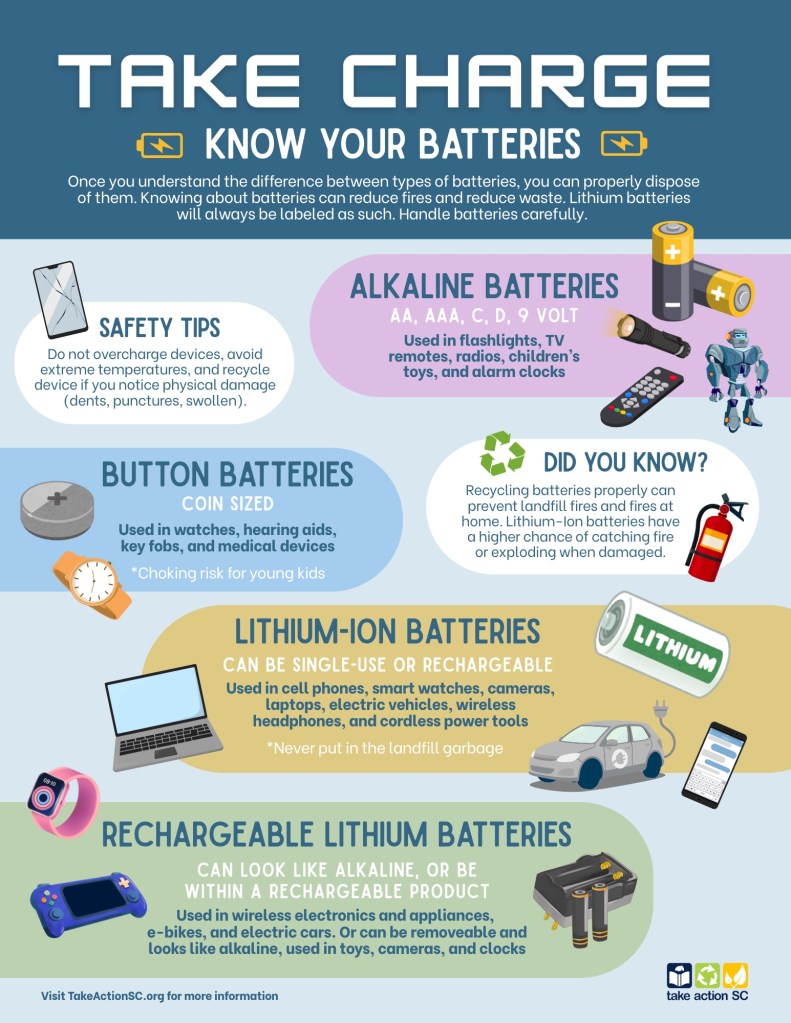
Students may not make the connection that so many of their devices are made of batteries that could be dangerous if improperly taken care of. Phones, laptops, smart watches, and wireless headphones, are all made with lithium batteries.
Lithium-Ion battery fires are becoming more frequent. Knowing the kinds of batteries can help know if they are recyclable or not. Noting if it is alkaline or lithium ion is an important difference in determining which waste stream it should be placed in.
 Take Action SC